ROAD SAFETY and OFFENSIVE and DEFENSIVE DRIVING
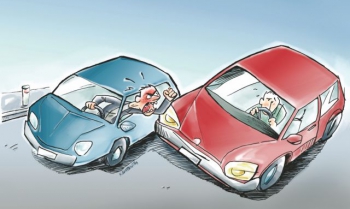
I will refer to some general behaviors that a driver with proper traffic etiquette should have.
Aggressive driving is one of the main causes of accidents not only in GREECE but all over the world. Read this article carefully and when driving DO NOT CAUSE - DO NOT BE INVOLVED IN AN ACCIDENT and ADAPT to the prevailing conditions.
A- Driving is divided into DEFENSIVE and OFFENSIVE. Many argue, experts and non-experts, that our driving should only be DEFENSIVE, it is not necessary and it is not mandatory.
To determine which is ATTACKING and which is DEFENSIVE driving
Driving (don't provoke, don't get involved) and behavior in general is considered AGGRESSIVE where it is expressed with anger and aggression (unjustified) and is due to the irritation of the driver, caused by the unacceptable behavior of another road user.
In certain situations, such as avoiding an accident, AGGRESSIVE DRIVING is required, provided you cannot do anything better.
Let us mention some examples for better understanding:
- You drive on a winding road and just before the turn they force you to slow down, while you had planned to take it with more kilometers and in your anger you overtake him on the turn (OFFENSIVE) and the accident happens, instead of slowing down and keeping the correct safety distance (DEFENSIVE). While if the conditions are such that you cannot stay behind the other vehicle, then you must accelerate in order to overtake, on the bend, without risk and quickly, here aggressive driving is not only desirable but also considered necessary in order to avoid the accident.
- Someone in front of you is driving and when trying to change direction, he doesn't activate the direction indicators, as a result of which you don't understand his intentions, and in your anger it is accelerated (AGGRESSIVELY) to make a remark or treat him in the same way and the accident happens again.
- Someone violates your right of way at an intersection where the other person has STOPPED and you get so upset that at the stop light you start arguing and get so upset (AGGRESTIVE) that you then cause an accident out of anger because you overtook someone you shouldn't have
- Someone overtakes you and instead of slowing down (DEFENSIVE driving) you increase your speed (AGGRESSIVE driving), the person next to you may have an accident and you pay for it too.
- A pedestrian crosses the road where there is no crosswalk and you start honking your horn (OFFENSIVE) instead of slowing down and stopping those following as well (DEFENSIVE).
Who is at fault is the least important in these cases. What matters is that anger caused an accident.
Do not argue with other road users and especially when you are irritated or others are irritated
Various researchers say that the great majority of drivers are young people aged 25-35, however the experience of the author and instructor is somewhat different. The conditions we live in today in GREECE are such that, regardless of age, we lash out in an unacceptable way at anyone we meet in front of us, pedestrian, vehicle, animal, etc. Think for yourself what makes you angry and what doesn't and fight it, put yourself in the position of the other person who irritates you and the other person in your position and decide on your behavior, would you ask for understanding?, then show understanding too. You are under no circumstances justified to drive irritated, if necessary stop for 10 minutes on the side of the road to let your irritation go away.
B- ASSESSMENT of Vehicle and Driver Condition (DEFENSIVE DRIVING) Adapt
The model of the vehicle plays an important role in driving as well as the possible damages that exist and you know them.
It's not the same to drive a late model compared to a 10 year old model, a BMW compared to a SMART. Also if it is known that you have worn tires you cannot drive in the same way as you drive a vehicle with correct tires, the same applies in the case that the physical and psychological state of the driver is not the most suitable.
In all the above cases you need to adjust your driving down or up
C- Predicting mistakes of other road users (DEFENSIVE DRIVING) Adapt
This is a chapter of utmost importance to achieve the best possible ROAD SAFETY and I have to say, it is not very easy to achieve since most schools do not do this kind of training. However, it is encouraging, because lately, more and more schools are training in this direction
Many drivers believe that mistakes should be paid for by him who does them and not by him which does not foresee them, there is no objection to this and the one who does it will pay.
But if you have the same point of view, in terms of liability, I will disagree with you, because if you do not anticipate the mistakes of other users in time, you will be involved in an accident without being responsible, resulting in injuries or losing your vehicle for several days for repairs. Legally, there can be complicity of the one who did not foresee the violation under certain conditions
Here are some examples:
- You come to an intersection where right-of-way applies and the person on the left does not give you priority, stop yourself and let him go. That is, anticipate the breach. Here you can also be considered responsible if you passed the intersection at a speed of more than 20 km/h
- You are 1st at a traffic light and it turns green for you, consider that someone may violate the red light on a perpendicular road. So give priority even if it is illegal. Failure to do so may result in joint liability.
I will describe the experience I had with prospective drivers from GERMANY and ENGLAND. In a course, I ask the candidate that: when he arrives at an intersection and the other person has a STOP, he will do well to expect that the other person will violate the STOP and therefore stop. The candidate's answer was as follows: The violation does not concern me because he will pay me, ie he can be injured and he does not care. This is not logic. In EUROPE, of course, violations are difficult to happen, but who excludes that a drunk and not only that, does not commit a violation even abroad.
ATTENTION therefore DEFENSIVE DRIVING and anticipating the mistakes of other road users.
CONCLUSION
Drive DEFENSIVELY, however, also train yourself in aggressive driving for cases where it is not possible otherwise, aggressive driving must always be done with your own safety and that of other road users in mind, as long as the AGGRESSIVE DRIVING is not done for the sake of jumping a flea