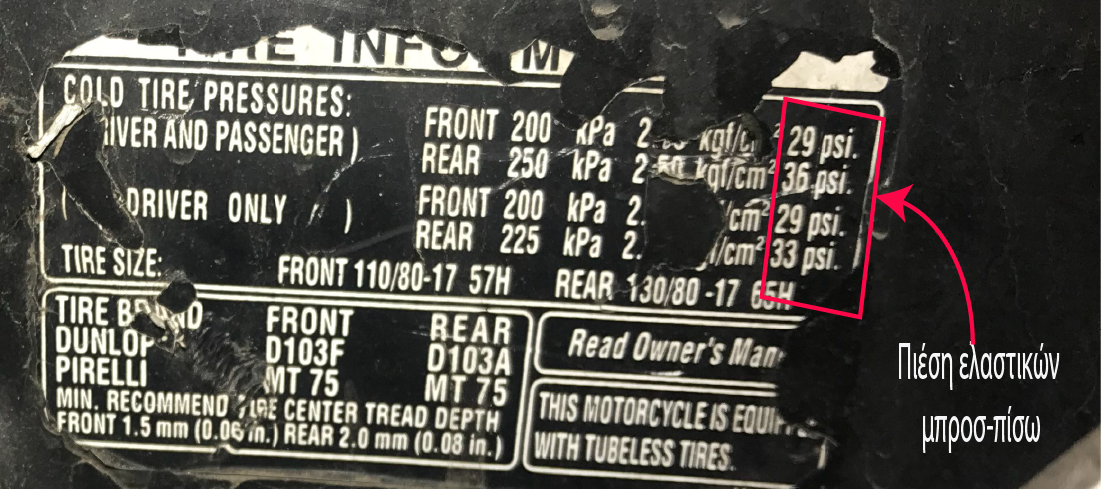
Tire pressure
The air pressure is specified by the motorcycle manufacturer and can be found on the nameplate.
Oral for motorcycles
The checks and actions you need to know before starting your motorcycle test, organized into clear sections with pictures.
Checks before you start
Motorcycle instruments
The first examiner questions often concern the basic instruments and what each measures.
It measures the kilometers the motorcycle runs per hour.
It measures the total kilometers traveled by the motorcycle.
It measures engine revolutions per minute.
Tires
The air pressure is specified by the motorcycle manufacturer and can be found on the nameplate.
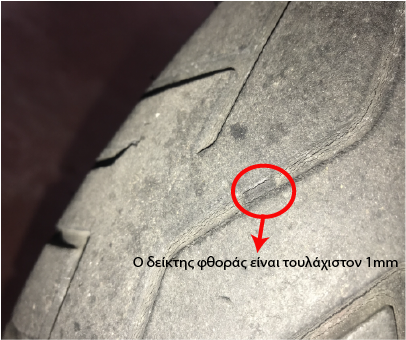
The groove depth must be at least 1 mm. When the wear indicator reaches the same height as the tread, the tire is replaced.
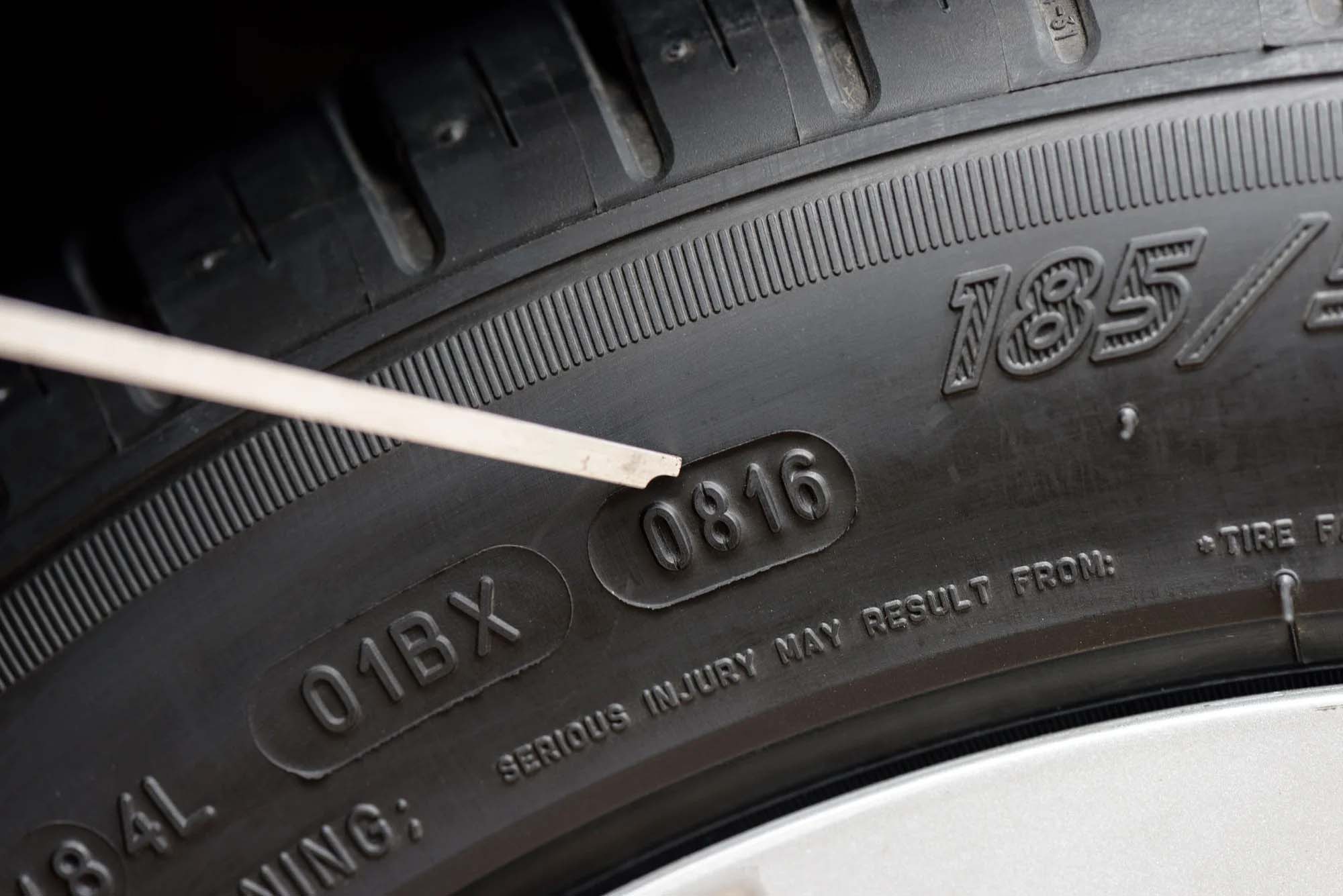
The four digits on the side of the tire indicate the week and year of manufacture and after 3 years from the indicated date we replace them.
CHAIN-CHECK AND ADJUSTMENT
Before taking the bike off the stand, check the chain for foreign objects and that it is sufficiently lubricated. To check chain play it must be on the side stand.
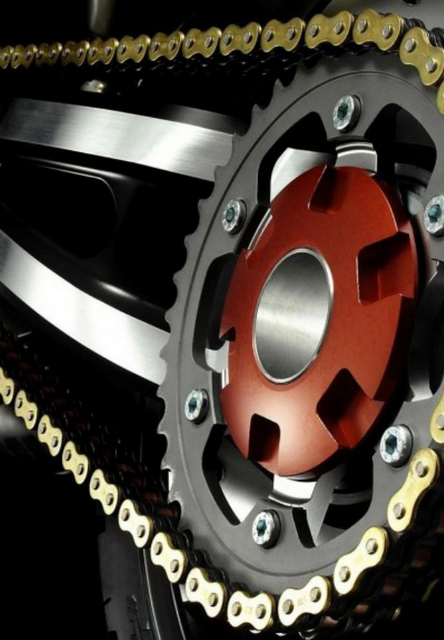
Consult the manufacturer's label. Slack is controlled midway between the cogs, on the underside of the chain, by lifting and releasing it.
Loosen the central shaft, unscrew the lock nuts of the adjusters and tension the chain by turning the adjusters clockwise.
The line must be at the same point on the right and left for the wheel to be aligned. If the arrow is in the red area, chainsaws are needed.
LIGHTS
The lights must always be on, low beam, day and night, and you use them as follows:
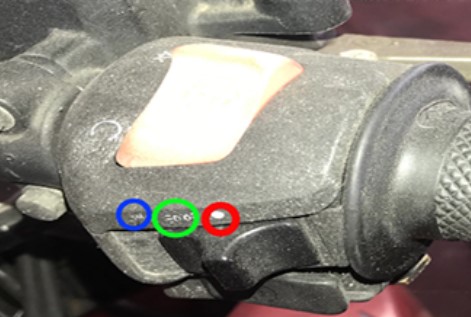
Middle ladder, i.e. blue circle: you turn it on when you start and turn it off when you park the motorcycle.
Large staircase or march: you light them at night and on the condition that there is no other vehicle in front of you or in a radius of 100m.
Signal: you do it when you want to give someone priority or to avoid an accident. In the case of danger of an accident you also combine it with the horn
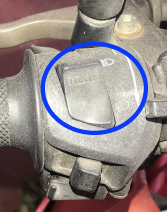
It is used at night, when there is no other vehicle opposite or in front within a radius of 100m.
Red circle for off lights, green for side lights or low and blue for low beam.
CENTRAL POWER AND POWER SWITCHES
The main power switch and the emergency switch are used for a different purpose. The main switch is used to start and stop the engine in the same way that it is used in a car.
You do not use the emergency switch, which is only used in the event of a fall or other emergency, such as a fire.
The fuel switch should be in the ON position while riding and in the OFF position only if the motorcycle is to be stationary for a long period of time.
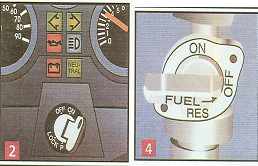
It is used to turn the engine on and off.
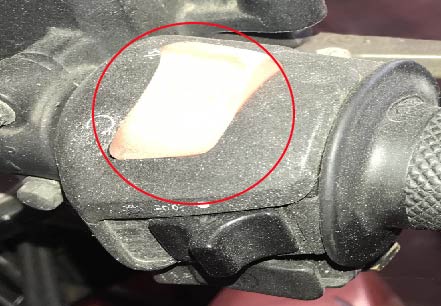
It is only used in the event of a fall or other emergency and turns off the engine but not the lights
After filling the tank, if you were driving on reserve, don't forget to put the indicator back ON.
LUBRICATION SYSTEM
Check the oil level provided that you have turned off the motorcycle for at least 2-3 minutes on a flat incline. Take out the plug-indicator, wipe it, place it again vertically without screwing and the level must be above the min, preferably close to the max. If it is close to the min, fill from the plug with the oil recommended by the manufacturer
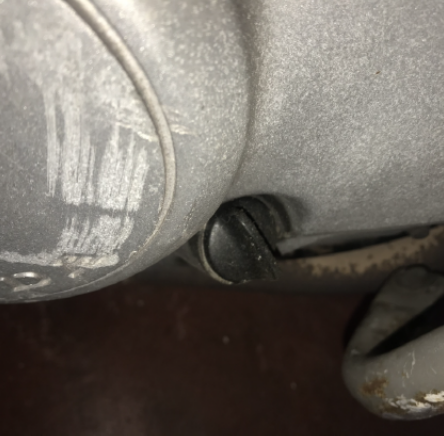
The check is carried out on level ground after stopping the engine for a few minutes.
Check for leaks from seams on the right and left of the box, pressure valve, drain valve, filter and oil pan seams.
You immobilize the machine and tow it to the workshop.
COOLING SYSTEM
Cooling system for water-cooled motorcycles only. Check the coolant level to be above the minimum.
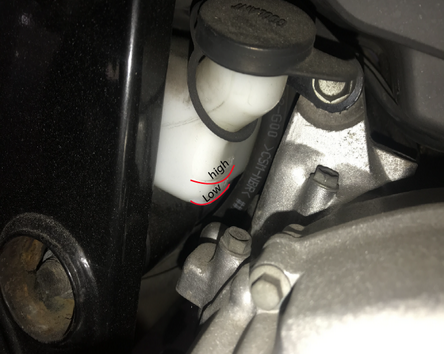
The level must be above the minimum in the container.
Check the collars, water pump for leaks, thermostat, fan and brushes.
The brushes must be clean for proper cooling.
BRAKES (FRONT WHEEL)
On the front wheel check the hydraulic disc brake, lever and brake fluid reservoir. The level should be above the minimum and the feel of the lever should be soft at first, harden and at some point stop pressing.
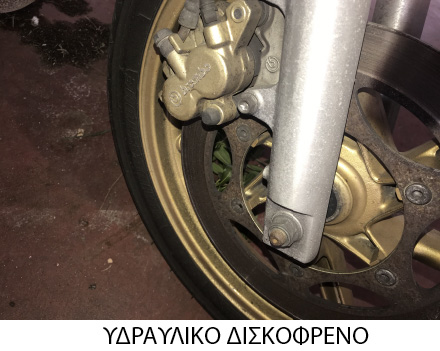
Visually check the caliper, the disc and that the brake grips properly when you press the lever.
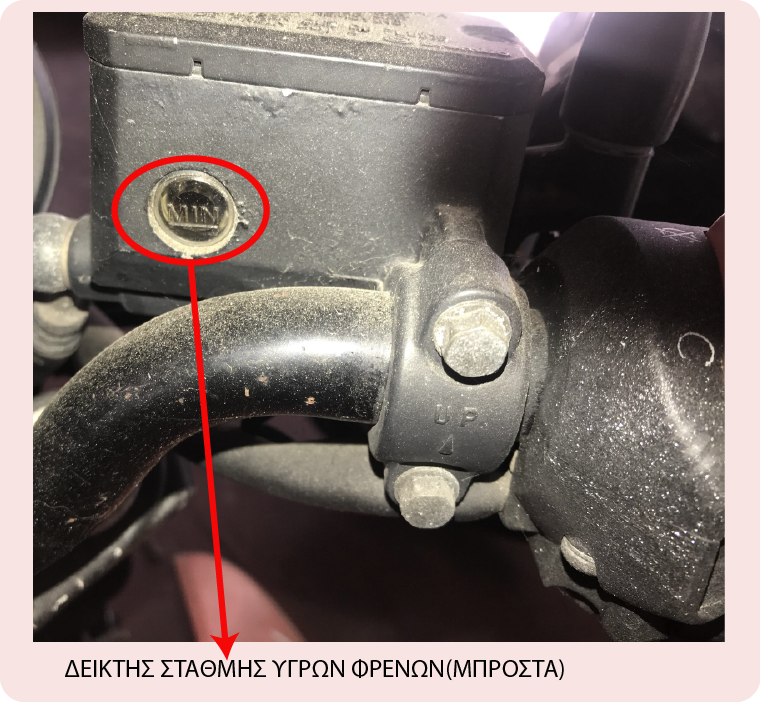
Check the brake fluid level in the front reservoir. It must not be below the minimum. If it is at the minimum you are immobilized and WE NEVER TOP UP
BRAKES (REAR WHEEL)
On the rear wheel check the rear brake, the drum where there is one, and the brake fluid reservoir. The motorcycle must stop properly when you apply the rear brake.
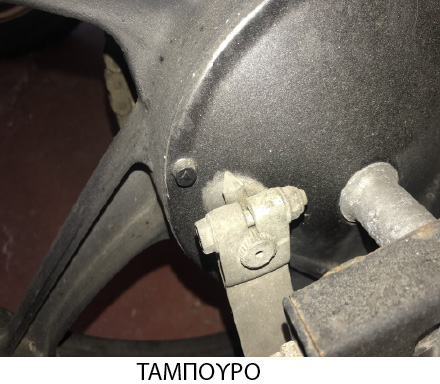
Check the rear brake and that the bike stops properly without delay or unusual feeling.
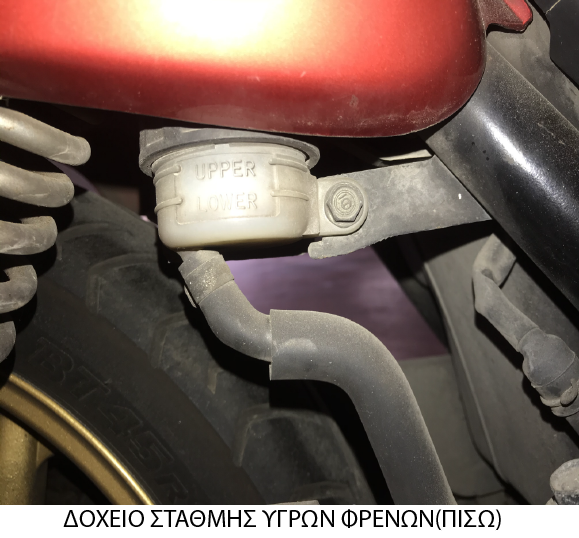
Check the level in the rear brake fluid reservoir and make sure it is between the correct limits.
POSTS-ADDRESSING SYSTEM
In the front suspension you have telescopic fork with internal spring and oil. Check that the seals are not dry or cut and that there is no leakage.
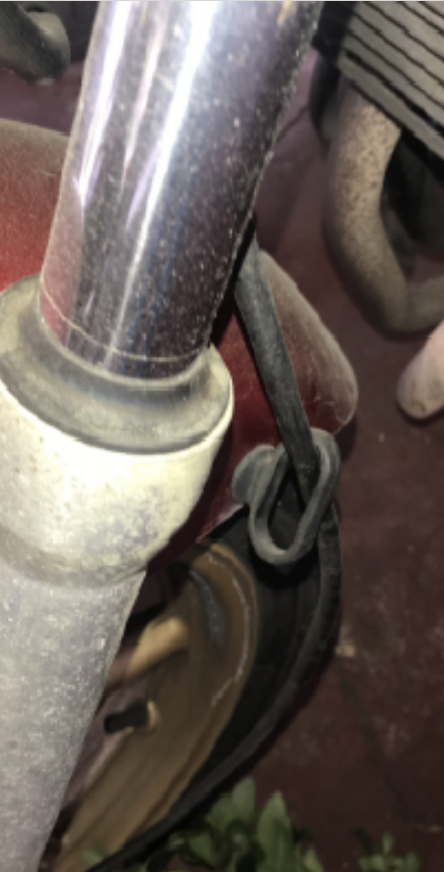
Check that the seals, filler and drain plugs are tight and leak-free.
At the rear there are external springs with oil shock absorbers. Make sure there is no foreign object in the spring, rust or leakage.
Check that the ends are not broken and that turning the steering wheel left-right does not trap the hand between the tank and the levers.
Documents and parking
You must have your documents and essential equipment with you before driving.
Driver's license, vehicle license, insurance policy, vehicle registration certificate and road tax.
Special motorcycle kit, gloves, helmet, sunglasses and raincoat.
Park the motorcycle in a stable and unobstructed manner.
You know the basic differences in operation and lubrication, depending on the type of engine.
MOTO practical exam
Read the sections and ask the instructor to ask you oral questions before the practice.