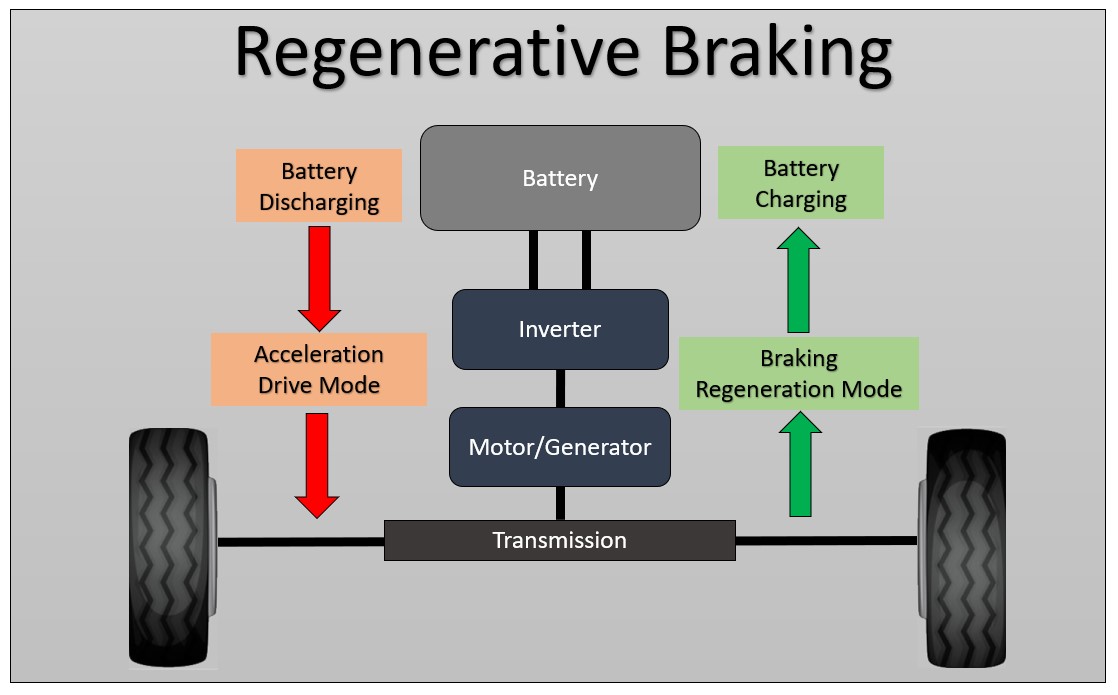
The regenerative braking system is one of the most innovative technologies in electric vehicles, offering a significant improvement in energy efficiency and vehicle range. But how exactly does this system work, and how can the driver take advantage of it to increase the vehicle's range? Let's see in detail.
What is the Regenerative Braking System?The regenerative braking system converts the vehicle's kinetic energy into electrical energy during braking or deceleration. Instead of losing this energy as heat, as is the case with traditional braking systems, it is stored in the vehicle's battery for future use.
How It Works:- When the driver takes his foot off the accelerator or presses the brake, the electric motor acts as a generator, converting the vehicle's kinetic energy into electricity.
- The electricity produced is stored in the vehicle's battery, thus increasing its range.
Regenerative braking offers several benefits that are critical to the efficiency of electric vehicles:
- Energy Saving: Each time the system is activated, the vehicle stores energy that would have been lost in a conventional vehicle.
- Increasing Autonomy: The energy recovered can be used to power the vehicle for a longer distance, increasing its range.
- Brake Wear Reduction: The system reduces the use of conventional brakes, extending their life.
How to Use the Regenerative Braking System to Save Range
Correct use of the regenerative braking system can significantly contribute to increasing the range of your electric vehicle. Here are some tips to get the most out of this system:
1. Take advantage of Deceleration
- Let off the gas earlier when approaching junctions or traffic lights, rather than braking suddenly. This gives more time for the regenerative braking system to collect energy.
- On descents, use the system to slow the vehicle instead of conventional brakes.
2. Select the Appropriate Regenerative Braking Level
- Many electric vehicles allow drivers to adjust the level of regenerative braking. In urban areas, where stops and starts are frequent, a higher level of regenerative braking may be more efficient.
- At higher speeds or on highways, you may prefer a lower level for a smoother ride.
3. Drive with Foresight
- Try to anticipate road conditions and slow down smoothly and gradually. This not only helps to save energy but also to avoid sudden stops that reduce the efficiency of the regenerative braking system.
4. Combine Regenerative and Conventional Braking
- In emergency situations, you will need to use the conventional brakes. However, when it is safe, prefer gradual deceleration through regenerative braking.