Import
The automotive industry is in a period of significant change as new technologies develop at a rapid pace. Electric vehicles (EVs), hybrids (HEVs) and plug-in hybrids (PHEVs) are gaining more and more ground in the market, offering more environmentally friendly solutions and greater efficiency. However, the use of these technologies requires adaptation to driving style to achieve maximum battery and fuel economy. In this article, we'll look at these new technologies and give tips on how to use them effectively.
PURELY ELECTRIC VEHICLES
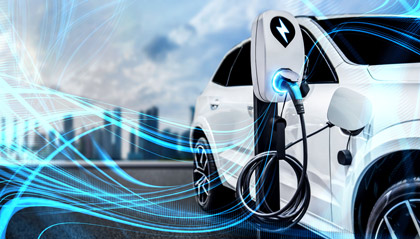
Electric motor operating principlePure Electric Vehicles (EVs) are cars that run solely on electricity, without an internal combustion engine. This technology has evolved significantly in recent years, and EVs are now an important part of the vehicle market worldwide. Let's look at exactly what EVs are, their pros and cons, and some popular examples on the market.
Features- Fully Electric Drive: EVs do not consume gasoline or diesel and emit no pollutants while driving. The energy required for their movement comes exclusively from the battery.
- High Efficiency: Electric motors in EVs are much more efficient compared to internal combustion engines, as they convert a greater percentage of stored energy into kinetic energy.
- Quiet Operation: EVs are extremely quiet in operation, as they have no noisy mechanical movements or fuel combustion.
- Direct Torque: The electric motors provide instant torque, offering quick and smooth acceleration from a standstill.
- Zero Emissions of Pollutants: EVs emit no pollutants while driving, which makes them environmentally friendly and helps reduce air pollution.
- Reduced Operating Costs: Electricity is cheaper than fossil fuels, and EVs have fewer mechanical parts, reducing maintenance and repair costs.
- Renewable Energy: EVs can be charged with electricity generated from renewable sources such as solar or wind power, further enhancing their environmental benefit.
- Quiet Driving: The lack of noise makes driving more pleasant and reduces noise pollution in cities.
- Direct Subsidy: In many countries, the purchase of EVs is subsidized by the government, making these vehicles more affordable for consumers.
- Limited Autonomy: Although battery technology is constantly improving, most EVs still have a shorter range compared to traditional vehicles.
- Charging Time: Charging an EV can take several hours, particularly if a fast charger is not used, which may not be practical for all users.
- Limited Availability of Charging Stations: Despite the increasing installation of charging stations, in some areas the infrastructure is still insufficient.
- Initial Purchase Cost: EVs tend to be more expensive to purchase than traditional cars, although this is offset by lower running costs in the long run.
Hybrid Vehicles (HEVs)
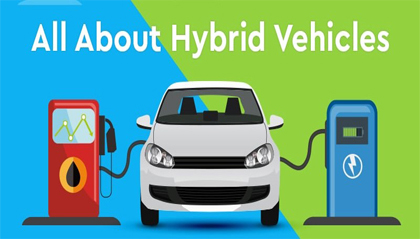
Principle of operation of Hybrid Vehicles (HEVs)- Hybrid Vehicles (HEVs) are vehicles that use two or more energy sources for their propulsion, usually an internal combustion engine (petrol or diesel) combined with an electric motor powered by a battery.
- Operation:
- When starting and at low speeds, the vehicle can be driven exclusively with the help of the electric motor, thus reducing fuel consumption and emissions.
- At normal or high speeds, the internal combustion engine takes over the main function, with the electric motor providing assistance, especially during acceleration or on uphill journeys.
- During deceleration or braking, the energy generated is stored in the battery via the regenerative braking system, which converts kinetic energy into electricity.
Combination of Internal Combustion Engine and Electric Motor
- Two Engine System:
- Internal Combustion Engine (ICE): Traditionally, internal combustion engines burn fuel to create kinetic energy. In HEVs, this engine is often smaller and more efficient than those found in conventional vehicles, since its performance is improved with the help of the electric motor.
- Electric motor: The electric motor works in conjunction with the internal combustion engine to provide extra power when needed, reduce the load on the internal combustion engine and propel the vehicle at low speeds. Power for the electric motor comes from a battery, which is charged either by the internal combustion engine or by the regenerative braking system.
- Function in Combination:
- Parallel Hybrids: Both engines can drive the vehicle at the same time. This type is the most common, with the system choosing when to use the electric motor, the internal combustion engine or both, depending on driving conditions.
- Series Hybrids (Series Hybrid): The internal combustion engine does not directly drive the vehicle, but is used to generate electricity for the electric motor. The electric motor is the one that provides the power to move the vehicle.
- Series-Parallel Hybrid: This type combines the features of the two systems above, allowing the simultaneous or alternative use of the two engines depending on driving conditions.
- Reduced Fuel Consumption: HEVs use the electric motor to reduce the need for fuel, particularly in urban commuting where speeds are low and stops are frequent.
- Lower Pollutant Emissions: Thanks to the use of the electric motor, hybrid vehicles emit less pollutants compared to conventional vehicles.
- Increased Performance: The combination of the two motors offers higher overall performance, especially during acceleration and uphills, where the electric motor can provide additional torque.
- Regenerative Braking: The regenerative braking system not only contributes to performance but also increases range, as the energy normally lost during braking is reused.
- System Complexity: HEVs are technologically more complex than conventional cars, which can lead to higher maintenance and repair costs.
- Higher Purchase Cost: Due to the dual technology (ICE and electric motor), hybrid vehicles are usually more expensive than traditional cars.
- Limited Long Distance Performance: Although HEVs are efficient in urban conditions, on long journeys where the use of the internal combustion engine dominates, their performance may not be significantly better than that of conventional vehicles.
- Environmental Charge of Batteries: Although HEVs emit less pollutants, the production and recycling of their batteries can have an environmental impact.
Plug-in Hybrid Vehicles (PHEVs)
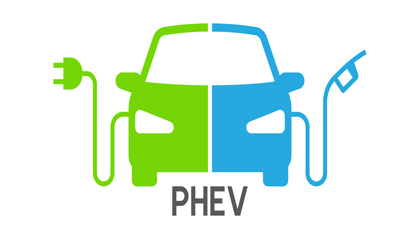
Plug-in Hybrid Vehicles (PHEVs)Plug-in Hybrid Vehicles (PHEVs) are an intermediate technology between traditional hybrid vehicles (HEVs) and pure electric vehicles (EVs). The ability to charge from an external source makes them a versatile choice for drivers who want to take advantage of the benefits of both worlds. Let's break down the key differences between HEVs and PHEVs, how PHEVs work, and the pros and cons of this technology.
FeaturesDifference between HEV and PHEV
- Hybrid Vehicles (HEVs):
- HEVs combine an internal combustion engine with an electric motor, just like PHEVs, but the key difference is that the batteries in HEVs are charged only through regenerative braking and the internal combustion engine. They do not have the ability to charge from an external source of electricity.
- In HEVs, the electric motor provides support to the internal combustion engine mainly during acceleration and low speeds, but its range with exclusive use of electric power is limited.
- Plug-in Hybrid Vehicles (PHEVs):
- PHEVs have a larger battery than HEVs and can be charged from an external source, such as a charging station or household outlet. This allows PHEVs to run for longer distances on electric power alone, before the internal combustion engine kicks in.
- Unlike HEVs, PHEVs offer true electric range, typically between 30 and 60 kilometers, depending on model and battery.
2. Possibility of Charging from an External Source
- Charging:
- PHEVs can charge their batteries from external sources of electricity. This feature allows drivers to start the day with a fully charged battery, using only electricity for their daily commute.
- Charging can be done at public charging stations, household sockets or special fast chargers. The charging time depends on the battery capacity and the type of charger used.
- Operation in Daily Use:
- In practice, drivers of PHEVs can cover most daily journeys (such as commuting within the city) on electric power alone, thereby significantly reducing fuel consumption and emissions.
- When the battery is discharged, the PHEV operates like a traditional HEV, using the internal combustion engine and electric motor for propulsion.
- Reduced Fuel Consumption: PHEVs offer the possibility of electric driving for short and medium distances, significantly reducing the need for fuel. This has a direct benefit in both fuel economy and reduced running costs.
- Flexibility: Drivers of PHEVs have the option to drive electrically when possible and use the internal combustion engine for longer distances or when there is no access to charging stations.
- Environmental Benefits: In urban areas, PHEVs can drive without emissions, helping to reduce air pollution.
- Lower Pollutant Emissions: Overall, PHEVs produce less pollution than conventional HEVs, particularly if drivers use them primarily in electric mode.
- Higher Purchase Cost: PHEVs are typically more expensive than HEVs and traditional vehicles due to their larger battery and charging technology.
- Limited Autonomy in Electric Mode: Despite their ability to run on electricity alone, this range is limited, usually up to 60 kilometers. For longer distances, the internal combustion engine is activated, which reduces the overall benefit in terms of fuel consumption and emissions.
- Need for Charging Stations: Taking full advantage of PHEVs requires access to charging stations or home charging, which is not always possible for all drivers, particularly in areas with insufficient charging infrastructure.
- Weight and Complexity: The presence of a large battery and two different propulsion systems (internal combustion engine and electric motor) adds weight and complexity to the vehicle, which can affect its performance and usability.
Mild Hybrid Vehicles (MHEVs)
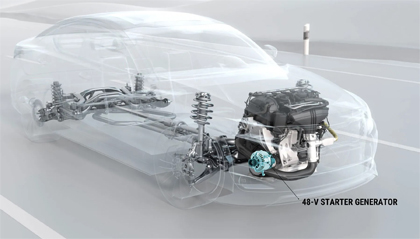
Mild Hybrid Vehicles (MHEVs)Mild Hybrid Vehicles (MHEVs) are a simpler and more economical approach to hybrid technology compared to full hybrid vehicles (HEVs) and plug-in hybrid vehicles (PHEVs). Mild hybrid technology combines the internal combustion engine with a small electric motor, which provides assistance in various phases of driving, improving fuel economy and vehicle performance. Let's break down this technology, how it works, and the pros and cons it offers.
FeaturesWhat are MHEVs:
- MHEVs are vehicles that use a mild hybrid assist system, which includes a small electric motor and a low voltage (typically 48V) battery. Unlike full hybrid vehicles, the electric motor in an MHEV cannot propel the vehicle by itself.
- The electric motor acts as an auxiliary system for the internal combustion engine, improving its performance and reducing fuel consumption and emissions.
- Main Details:
- Starter/Generator: This electric motor acts as both a starter for the internal combustion engine and a generator to recharge the battery during braking and deceleration.
- Low Voltage Battery: The battery in MHEVs stores the energy recovered from regenerative braking and provides it to the electric motor for assistance when needed.
2. How It Helps the Internal Combustion Engine
- Startup Help and Speed Up:
- The electric motor assists the internal combustion engine during starting and acceleration, providing additional torque. This allows the internal combustion engine to work more efficiently and reduce fuel consumption in those phases of driving where more energy is traditionally required.
- Stop-Start function:
- At stops, such as at traffic lights or in traffic jams, the stop-start system switches off the internal combustion engine to reduce fuel consumption and emissions. When the driver releases the brake, the electric motor immediately restarts the engine, ensuring a smooth and quick restart.
- Regenerative Braking:
- During braking, the electric motor acts as a generator, recovering the kinetic energy that would be lost in a traditional system and storing it in the battery. This energy can later be used to power the internal combustion engine, reducing the need for fuel.
- Reduction of Fuel Consumption:
- With the help of the electric motor, the MHEV consumes less fuel compared to a conventional vehicle, especially in urban conditions, where frequent starts and accelerations require increased consumption.
- Reduced Fuel Consumption: Mild hybrid technology improves the efficiency of the internal combustion engine, leading to lower fuel consumption and lower emissions.
- Improved Performance: The electric motor provides extra torque when needed, which improves acceleration and a smooth ride, especially at low speeds.
- Financial Solution: Compared to full hybrids or plug-in hybrids, MHEVs are more affordable, offering significant fuel economy benefits without the high purchase and maintenance costs of more complex systems.
- Simple Integration: The technology of MHEVs can be easily integrated into existing car models, making it ideal for manufacturers who want to improve the performance of traditional engines without radical design changes.
- Limited Assistance: Unlike full hybrids and plug-in hybrids, MHEVs cannot run solely on electricity. The electric motor only provides assistance, without being able to completely replace the internal combustion engine.
- Smaller Emissions Reduction: Although MHEVs reduce emissions compared to conventional vehicles, this reduction is less than that achieved with full hybrids or electric vehicles.
- Limited Fuel Economy: The fuel savings in MHEVs are real, but not as significant as in more advanced hybrid or electric systems. Therefore, MHEVs offer an intermediate solution rather than a complete upgrade in terms of fuel consumption and efficiency.
CONCLUSIONS
1Pure Electric Vehicles (EVs)
They offer the maximum reduction in emissions, as they operate exclusively on electricity. They are ideal for those who have access to charging stations and want to get completely off fossil fuels. Despite the range and charging challenges, continuous improvement in technology makes EVs a viable option for the future.
2Hybrid Vehicles (HEVs)
They are a balanced solution for those who want to reduce fuel consumption without relying solely on electricity. They combine the efficiency of an electric motor with the reliability of an internal combustion engine, offering economy and flexibility.
3Plug-in Hybrid Vehicles (PHEVs)
They give drivers the flexibility to run on both electricity and fuel, depending on the conditions. These vehicles offer greater range in electric mode than HEVs, further reducing fuel consumption, but require charging infrastructure to make the most of them.
4Mildly Assisted Hybrids (MHEVs)
It is the most affordable and simple form of hybrid technology, offering a small but substantial improvement in efficiency and fuel consumption. MHEVs are an intermediate step for those who want to improve their energy efficiency without drastically changing their habits.